
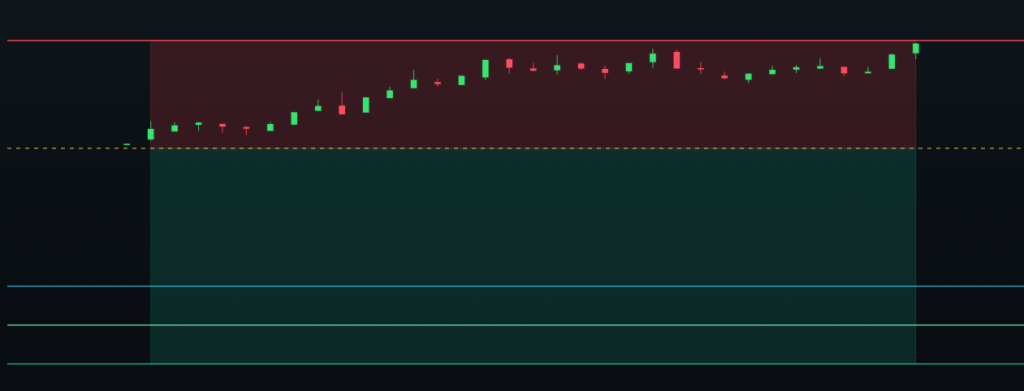
 Drawdown Review
Two Losses. Four Words. All Rules Were Followed.
I took two trades today. Both losses. The first ran 103 minutes before the level break failed. The second stopped out in 33 minutes. Both closed clean. I wrote four words in the rules journal: “All rules were followed.” That is the shortest note I have written in a month. It is not a sign of fatigue. It is a sign that I have seen this pattern enough times to stop needing to process it. This trading journal entry documents a routine loss day – and that is exactly the point.
There is a specific kind of session that produces a four-word note. It is not a good session. It is not a bad session. It is a session where the system did exactly what it was supposed to do on a day when the market did not cooperate – and the result was exactly what the plan predicted: two clean losses inside the risk limit. The note does not need to be longer because nothing needs to be examined. The rules were followed. The session is over. The next one starts tomorrow.
The Short Version
- Date: Thursday 16 July 2026
- Market: NIFTY – level breaks failing to hold
- Trades: 2 – short PE (103 min), short CE (33 min), both losses
- Result: Loss day
- Discipline: 10.0 – rules followed
- Note: Four words. All rules were followed.
The Trade Log
The first trade was a short PE in late morning. The real trading problem was simple – the level breaks did not hold. The move never really got going after the entry and the trade closed at the stop after 103 minutes. The second was a short CE mid-session: 33 minutes, same story. Both losses stayed inside the risk plan. No third trade. No interference. The discipline score is 10.0. The note is four words.
What I Learned
I have written about loss days before. On June 25, two losses produced a full-page reflection about the plan holding. I remember writing that entry. I remember how much effort it took to separate the result from the process. On June 30, two losses produced an article about the drama leaving. I remember that day too – the first time I felt the emotional weight begin to lift. On July 9, two losses produced four words of rules note. Today, two losses produced four words again. The pattern is not getting shorter because the losses are getting easier to accept. They are not. The pattern is getting shorter because the outcome was already priced into my expectations.
When I have seen enough two-loss days, I stop writing about them. I write the note. I close the platform. I come back the next day. That is not a skill I had in June. It is a skill I built across thirty sessions. The journal is there to record what happened. It is not there to process it. The processing happened months ago, during the sessions where I had to fight the urge to interfere, the urge to revenge trade, the urge to change the rules. I have processed all of that. Now there is only recording. Four words. All rules were followed. Next session.
Risk Notes
Both trades closed inside the predefined risk plan. The stop losses were respected. No third trade was taken. The daily rules were followed. Discipline scored 10.0.
Useful Resource
If this journal entry connects to one resource, it is the Rules That Survived page. The two rules that kept today clean: two losses do not justify a third trade, and accept the exit rather than argue with the market. Both were tested today. Both held.
Related Reading
- The Rules Note Was Four Words Long. – when the same pattern first appeared.
- Two Losses. No Interference. No Drama. – when the drama first stopped.
- Two Losses. The Plan Held. – the original loss-day entry.
Simple Questions
Why is a four-word note significant?
Because it means nothing went wrong beyond the anticipated loss. The system predicted this outcome. The rules handled it. The note is just a record, not a processing exercise. The shorter the note, the more routine the process has become.
Are loss days still important to document?
Yes. The journal’s value comes from documenting both good and bad sessions equally. A loss day that produces four words is still data. Over time, the pattern of loss days – how often they occur, how much they cost, how the system responds, and how the operator recovers – becomes more valuable than any single winning entry. The consistency of the note across multiple loss days is itself the evidence: the system does not change its behaviour based on the outcome.
Final Note
Two trades. Two losses. Four words. One closed platform.
All rules were followed. That is the entire note. And it is enough. Here is what enough looks like on a Thursday.