
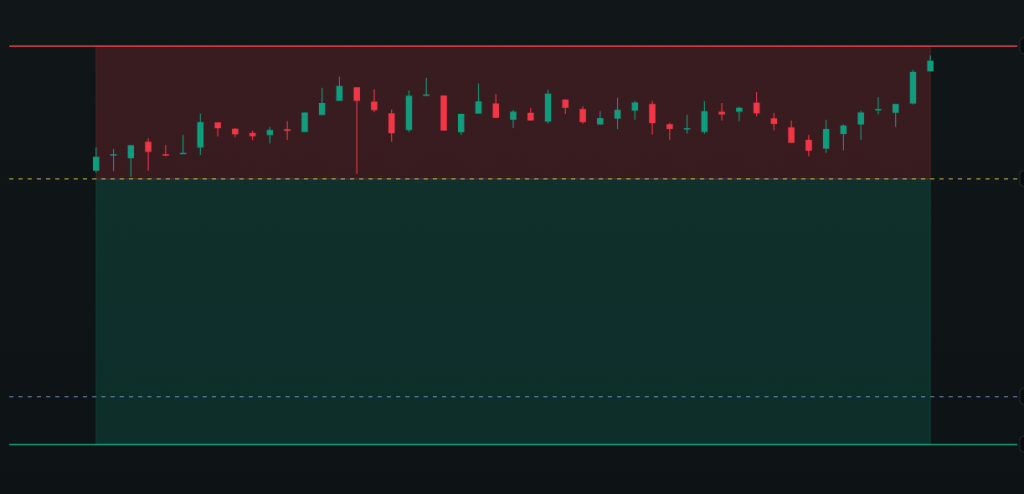
 Drawdown Review
NIFTY Options Trading Review: Short CE Loss Day
Today I took one NIFTY options trade. It was a short CE option trade that happened during the mid-session, fought for about 48 minutes, then reversed against the idea and closed as a loss.
This NIFTY options trading review is my trading journal for the day. I want it to show what I did, why I did it, what happened after entry, and how the stop loss protected the trade when continuation failed.
- What I traded: NIFTY options
- Trade type: Short CE option / short call option
- When it happened: Mid-session
- How long it lasted: About 48 minutes
- Result: Loss day
- Main keyword lesson: Stop loss discipline in intraday F&O trading
What I Did Today
I took one trade today. No overtrading, no second attempt, no trying to force the day back. It was one NIFTY short CE trade from my marked area.
The day itself was not clean. Continuation was weak, and buyers and sellers kept fighting around the marked levels. That kind of session can tempt a trader to guess too much. My job was to wait for the setup, take only the trade that qualified, and then let the trade management rules handle the rest.
When The Trade Happened
The trade came during the mid-session. I did not take it right at the open, and I did not chase the first move. I waited for price to come back to the marked area.
That matters in intraday options trading because chasing price usually creates poor entries. A trade can look exciting after the move has already started, but the risk-reward is often worse by then. Today I waited for the market to come to the area where I could judge the setup properly.
What Kind Of Trade It Was
The trade was a short CE option, which is the same as shorting the call side. In simple F&O language, I shorted the call option because the structure around the marked level gave a clean enough call-side short setup.
The reason was not random. Buyers and sellers were fighting around the level, ATR and volatility gave enough movement for the trade to matter, and the setup matched the plan. I am not sharing exact strikes, levels, or private entry rules here because this is a trading journal, not a signal service.
What Happened After Entry
Once the trade was active, the focus became simple: do not interfere emotionally. The position stayed open for about 48 minutes, so it had enough time to show whether the level break had real follow-through.
This is the part of trading that feels slower than it looks later on a chart. After entry, the market moved around the area and kept testing the idea. The trade was not instantly wrong, but it also did not become clean enough to relax.
That 48-minute fight is the real story of the day. The entry was only the start. The review is about how I handled the trade while it was still alive.
When It Reversed Against The Trade
After entry, continuation did not hold. Price pushed back against the short call idea. That was the point where the trade stopped being about opinion and started being about discipline.
When a short CE trade begins to reverse, it is easy to start arguing with the market. A trader can move the stop loss, wait for one more candle, add size, or convince himself that the market will come back. That is how a normal loss becomes a bad loss.
Today I had to accept that the setup had failed to continue. The market gave the answer. My job was to respect it.
What The Stop Loss Did
The trade closed inside the predefined risk plan. That means the stop loss did what it was there to do.
The result was a loss day, but it was not a messy day. The loss stayed controlled. I followed the trading rules, and I did not turn one failed continuation trade into emotional overtrading.
This is why stop loss discipline matters in options trading. The stop loss is not there to make every trade comfortable. It is there to keep the account safe when the trade idea is no longer working.
What I Learned
- The level break did not hold with enough continuation.
- The short CE option trade had time to work, but follow-through stayed weak.
- The loss stayed inside the planned risk structure.
- Accepting the exit was better than arguing with the market.
- A good intraday trading journal should record behavior, not only profit and loss.
The main lesson is simple: a valid setup can still lose. That does not mean the rules failed. It means the review has to check whether the trader followed the plan when the trade became uncomfortable.
Why This Matters For Retail Traders
Many retail traders only write down the final result. Profit or loss. Green or red. But that is not enough. A useful options trading review should explain the full story: what was traded, why it was traded, when it happened, how long it lasted, what happened after entry, and how the exit was handled.
Today?s answer is clear: one NIFTY short CE trade, taken in the mid-session from a marked area, active for about 48 minutes, reversed after continuation failed, and closed as a planned loss.
For broader investor education around risk and product understanding, traders can also use public resources from Investor.gov.
Read Next
- My Trading Desk trading journal archive
- Risk Management Handbook
- Free Risk Management Starter Checklist
- The Rule Is The Edge
- My Trading Desk tools
Useful Resource
If you are building a similar review habit, start with the Risk Management Handbook. It is made for traders who want cleaner risk control, better post-session review, and less emotional decision-making after a loss.
Simple Questions
What did I trade today?
I traded one NIFTY short CE option setup during the intraday session.
Why did I short the call option?
I shorted the call option because price came to the marked area, buyers and sellers were fighting around the level, and the call-side structure gave a clean enough short setup.
How long did the trade last?
The trade lasted about 48 minutes before the exit rules handled the position.
What happened after entry?
The trade had time to work, but continuation did not hold. Price pushed back against the short CE idea and the trade closed as a planned loss.
What is the main lesson from this loss day?
The main lesson is that a losing trade can still be controlled when the stop loss is respected and the trader does not argue with the market.