
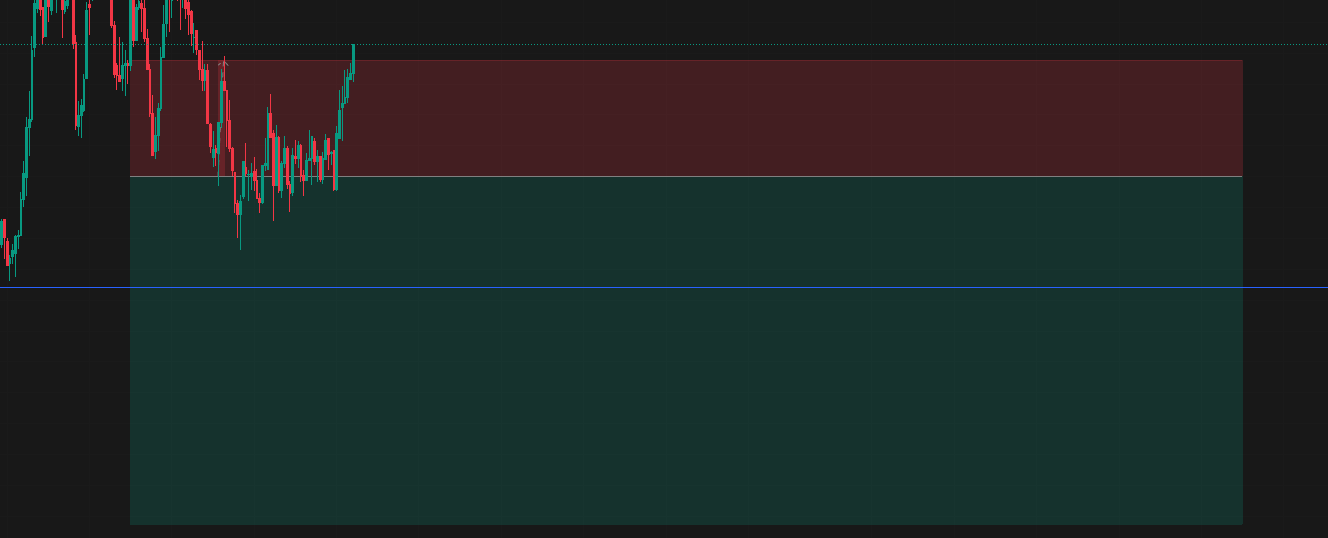
The market opened with a clear gap-down today as participants positioned themselves ahead of an important budget event scheduled for Sunday. From the opening bell itself, the price action felt heavy and uncertain. This was not a clean intraday trader’s market—it was driven largely by investors adjusting exposure rather than short-term trading flows.
Market Context and Bias
Early in the session, price moved into a brief consolidation phase and appeared as though it might attempt a downside breakout. Structurally, the setup was visible, but conviction was missing. The overall behaviour of the market did not inspire confidence. Volatility was event-driven, and follow-through was questionable.
Recognising this environment, I consciously avoided full risk exposure. When the market is dominated by positioning rather than execution-based flows, capital preservation becomes more important than forcing outcomes.
Trade 1: Reduced Risk, Clean Execution
I initiated the first trade with only half of my usual position size. The idea was straightforward: participate just enough to stay engaged while respecting the uncertainty created by the upcoming event.
The market did not follow through. It reversed quickly and hit my stop loss. There was no hesitation, no adjustment, and no emotional reaction. The stop was honoured exactly as planned.
This was a textbook example of disciplined execution—accepting what the market offers without argument.
Trade 2: Familiar Structure, Lower Conviction
Later in the session, price reversed from the day’s low and formed a potential reversal structure. The setup closely resembled yesterday’s price action, where a resistance level had broken cleanly and delivered a profitable move.
Given the visual similarity, I took the trade again—but with even less exposure. This time, I used only one-quarter of my normal position size.
The market attempted to break the same resistance level but failed decisively. Once again, price reversed and hit my stop loss without hesitation.
Risk Management Over Outcome
In total, the session resulted in:
- One half-risk stop loss
- One quarter-risk stop loss
The reduced sizing was deliberate. With a major event approaching and investor behaviour dominating intraday structure, full risk was never justified. Still, I took the trades to allow the market the opportunity to prove my bias wrong—as it often does.
Key Takeaways
This session was not about profit. It was about process.
- Risk was adjusted to match market conditions
- Stops were respected without emotion
- No overtrading, no revenge trading, no forcing trades
Days like these reinforce an important truth: long-term consistency comes from disciplined execution, not from winning every trade. Capital preserved today is capital available when the market returns to a cleaner, more tradeable environment.